
If you’ve been watching AI dominate headlines and wondering whether you’re positioned to actually benefit from it, you’re not alone. Most high-income investors have exposure to AI through a handful of large-cap tech stocks. That’s a start, but it’s a narrow slice of one of the most significant economic expansions of our lifetime. The global AI market is on track to grow from roughly $376 billion this year to more than $2.4 trillion by 2034. The opportunity isn’t just in the companies everyone already owns.
Most investors are still playing the same crowded trade. NVIDIA, the dominant force in AI computing, has become the default bet, with Wall Street analysts continuing to raise the ceiling. Consensus estimates project Nvidia’s revenue to jump roughly 48% in fiscal 2027, and some analysts believe the stock could approach double its current price if earnings growth accelerates as expected. The enthusiasm is understandable. North America alone captured nearly one-third of the global AI market in 2025, and this giant sits squarely at its center.
But here’s the question serious investors should be asking: if enthusiasts already own Nvidia, where’s the edge?
For example, cloud deployment now accounts for more than 71% of the AI market share, growing at a projected rate of 30.7% annually. And the infrastructure powering that cloud buildout is where the real leverage may lie. The AI opportunity goes beyond computing itself. It’s the physical and digital backbone that makes an entire ecosystem operate at scale: data centers, power supply, networking, and cooling. These are the unsexy picks that investors aren’t always talking about at dinner parties, which might be exactly why they’re worth a closer look.
AI Runs on Power, and That’s a Problem
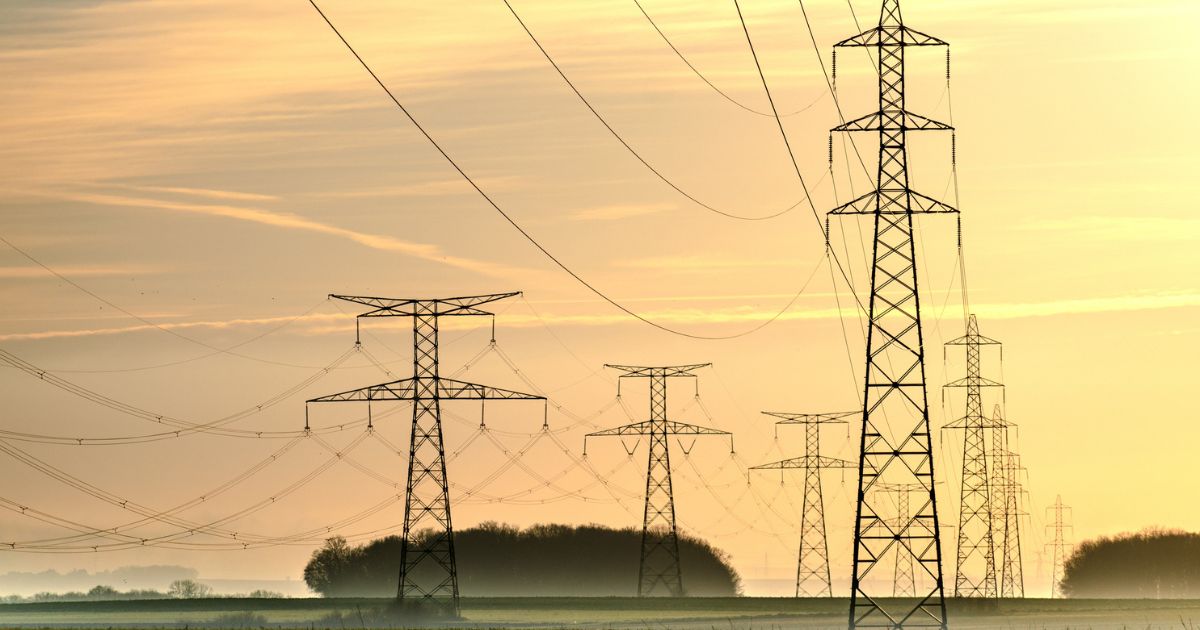
Once you start looking beyond the headlines, one constraint becomes hard to ignore: AI doesn’t just run on innovation; it runs on electricity.
Every query, model, and automation tool relies on data centers working around the clock. And those facilities are power-hungry in ways most people haven’t thought about. A typical AI-focused data center consumes as much electricity as 100,000 households annually, and the largest ones currently under construction are expected to use 20 times that amount. U.S. data centers consumed 183 terawatt-hours of electricity in 2024, more than 4% of the country’s total, and that figure is projected to more than double by 2030.
According to Bloomberg, a confluence of factors is placing significant strain on power grids worldwide, creating a tangible drag on economic growth. And according to Pew Research, everyday Americans are shouldering the cost in their power bills. In the PJM electricity market, which stretches from Illinois to North Carolina, data centers contributed to an estimated $9.3 billion increase in capacity market pricing.
I’ve been paying attention to this for a while.
There’s genuine debate about how to solve the energy problem, and some of it gets political fast. But set the politics aside, and the underlying dynamic is straightforward: demand for a critical resource is outpacing the infrastructure supporting it. That gap is where investment opportunities tend to emerge.
What “Investing in the Grid” Actually Means
When I talk about investing in the grid, I’m not talking about chasing a theme or picking the next AI stock. I’m talking about owning the assets that make AI possible. That includes data centers, power generation, transmission infrastructure, and fiber networks.
These are physical, capital-intensive assets built to support sustained, long-term demand. And the scale of that demand is hard to overstate.
McKinsey estimates that by 2030, data centers will require $6.7 trillion in cumulative capital investment worldwide to keep pace with AI-driven compute needs, spread across real estate developers, energy providers, semiconductor firms, and cloud operators. Utilities and energy providers alone face an estimated $1.3 trillion in AI-related capital requirements.
If you’ve invested in commercial real estate, this asset class should feel familiar. Data centers are increasingly treated as a specialized form of real estate — physical buildings with long-term leases, mission-critical tenants, and predictable cash flows. A 2025 survey by CBRE found that 95% of major investors worldwide plan to increase their allocations to data centers, with 41% planning to commit $500 million or more in equity, up from 30% the year prior. Vacancy rates in the sector finished 2025 at a historic low of 1% for the second consecutive year, with 92% of capacity currently under construction already pre-committed by tenants.
The appeal is structural. These are long-duration, hard assets — the kind where demand isn’t speculative but is driven by an accelerating, durable tailwind. AI doesn’t run on software alone. It runs on land, steel, power lines, and cooling systems. That’s the investment conversation worth having.
I encourage clients to take a disciplined approach and acknowledge what we don’t know. Researchers at the World Resources Institute point out that modeled projections for data center energy use by 2030 range from 200 to over 1,050 terawatt-hours per year, which is a pretty staggering spread. Some experts have also warned that utilities are being flooded with speculative grid connection requests, which may be distorting load forecasts.
The investment case for infrastructure isn’t built on assuming the most aggressive projections are right, but on recognizing that even the conservative ones point to a significant and sustained build-out, and that the physical assets required to support it will need to exist regardless.
Why the Real Action Is in Private Markets
These opportunities aren’t readily accessible to everyone. Most of the meaningful investment in AI infrastructure isn’t happening in the public markets, and there’s a structural reason for that.
Large-scale data centers, energy systems, and digital networks require significant capital, long development timelines, and patient ownership. These are conditions private markets are built for, and institutional conviction is growing.
The World Economic Forum puts the scale of opportunity in sharp focus. Meeting the world’s infrastructure demand will require $106 trillion in investment by 2040, spanning energy, digital, and transportation systems. Private investment plays a critical role, as public funding alone falls well short.
For high-income investors, access to these markets has improved meaningfully in recent years. But access isn’t the strategy. As I’ve written before, private credit and infrastructure funds can generate steady cash flow even when public markets struggle, and that’s exactly the kind of characteristic that belongs in a long-term, disciplined wealth plan. The trade-offs around liquidity, structure, and complexity are real, and they deserve a direct conversation. That’s always where we start.
What to Watch Out For
This is where I usually slow things down.
Private infrastructure and similar investments can be a good fit, but they come with real trade-offs.
Liquidity is one of the biggest. You’re not buying something you can sell tomorrow; you’re committing capital for years, and that needs to align with your broader plan. As I’ve noted in past articles on private investments, these structures often involve lock-up periods and limited access to funds, which can be challenging when flexibility is needed.
Manager selection is just as important. Two funds may both be labeled “infrastructure,” but have very different strategies, risk profiles, and outcomes depending on how they’re built and managed. Not all opportunities are created equal.
I’ve seen investors get pulled in by a compelling theme without fully understanding how the investment works — how returns are generated, what assumptions are being made, and how long capital is tied up. That’s why the focus should always be on fundamentals. If we can’t clearly answer those questions, we don’t move forward.
A Different Way to Think About AI Investing
This isn’t about chasing AI hype or trying to pick the next winner. It’s about understanding where durable, long-term value is being built and whether those opportunities belong in your portfolio. If you’re curious how this type of investment could fit into your broader plan, that’s a conversation worth having.
Sean Gerlin, CFP®, CPWA®, ChFC®, CLU®, is the Founder and Principal of Envision Wealth Planners, a fee-only financial advisory firm serving clients across Central Florida, including Orlando, Winter Park, Maitland, and nearby communities. In 2025, he was honored with both the Wealthtender Voice of the Client Award and the Best of BusinessRate 2025 award, recognizing his commitment to exceptional client experience and long-term relationship-focused planning. Sean specializes in helping high-income families, business owners, and commercial real estate executives align their wealth with their values through a comprehensive Financial Life Planning approach. Learn more about EWP at envisionplanners.com.
This material has been edited with the assistance of artificial intelligence tools. The information presented is based on sources believed to be reliable and accurate at the time of publication. This material is for educational purposes only and does not necessarily reflect the views of the author, presenter, or affiliated organizations. It should not be construed as investment, tax, legal, or other professional advice. Always consult a qualified professional regarding your specific situation before making any decisions.